
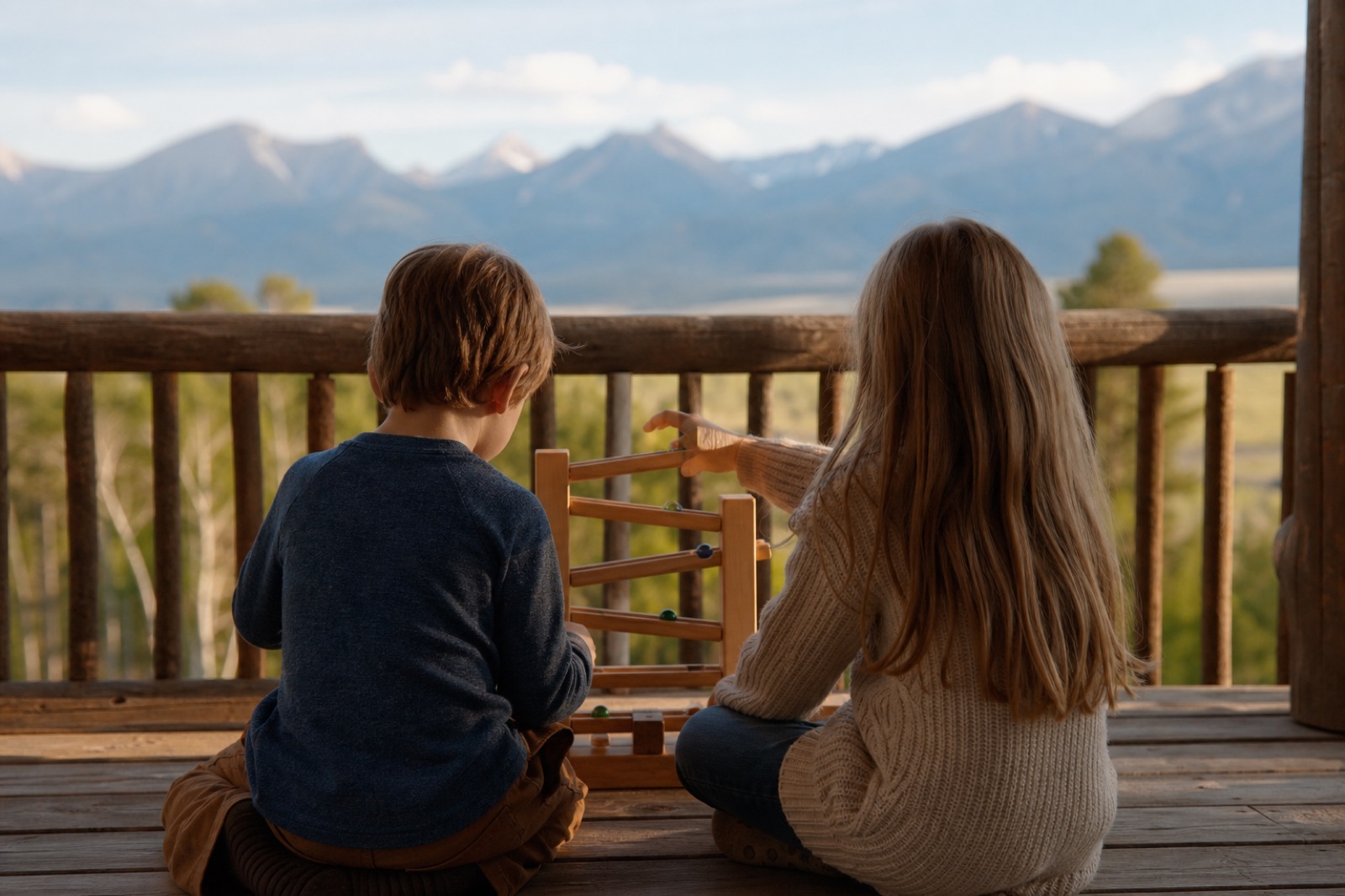
Play and Social Participation
What You Might Notice
Your child may watch other children play without joining, hesitate on the playground, or find turn-taking difficult. Movement confidence can affect whether play feels inviting.
How We Help
We use play itself to explore joining in, taking turns, and moving with more confidence. We look at the child’s strengths and the motor or sensory demands of a game rather than asking them to fit one way of playing.
What Sessions Look Like at Home
We can start with games your child already enjoys and make room for shared play with you. When it fits, community spaces can help us see how play changes outside the home.
What This Can Look Like at Different Ages
Toddlers
A young child may enjoy being near other children without joining the same game. We follow their interest and watch how movement, materials, and a familiar adult support play.
School-Age Kids
Playground games ask children to move, wait, notice others, and shift plans. We consider which part feels hard for a child who wants to take part.
Teens
Social participation may look like joining a shared activity instead of a playground game. An older child’s interests guide the conversation about movement and comfort with others.
How We Help at Home
We may use a game the child already likes, watch how a turn changes, or explore a movement activity in a familiar place. We look at sensory and motor demands alongside the child’s own way of playing. Parents can join in and share what happens when friends or siblings are present.
Joining a game takes more than knowing the rules. A child may have to move through a busy space, wait for a turn, and respond when another person changes the plan. We ask what the child enjoys when they play alone or with a trusted person. Those strengths help us understand where a shared game begins to feel harder without treating a quiet child as a problem.
Read more: Learning to Ride a Bike: Balance, Coordination, and Confidence · Is My Child Just Clumsy? Coordination and Balance.
Questions Parents Often Ask
Does watching from the edge of the playground mean something is wrong?
No single play choice tells you that. We ask whether your child wants to join and whether movement, sensory demands, or the game itself makes that difficult.
Will PEAK make my child play a particular way?
We start with what the child enjoys. Play on the child’s terms can give us a better view of how they move and participate.
Can a parent join a play-focused session?
Yes. Families are included in sessions. Your knowledge of favorite games and hard moments helps PEAK connect the work to everyday play.
A place to begin
Start with a Free 15-Minute Consultation
Tell us what you notice when your child joins other children in play.
Contact PEAK