
01 / 05
Why Riding Takes More Than Balance
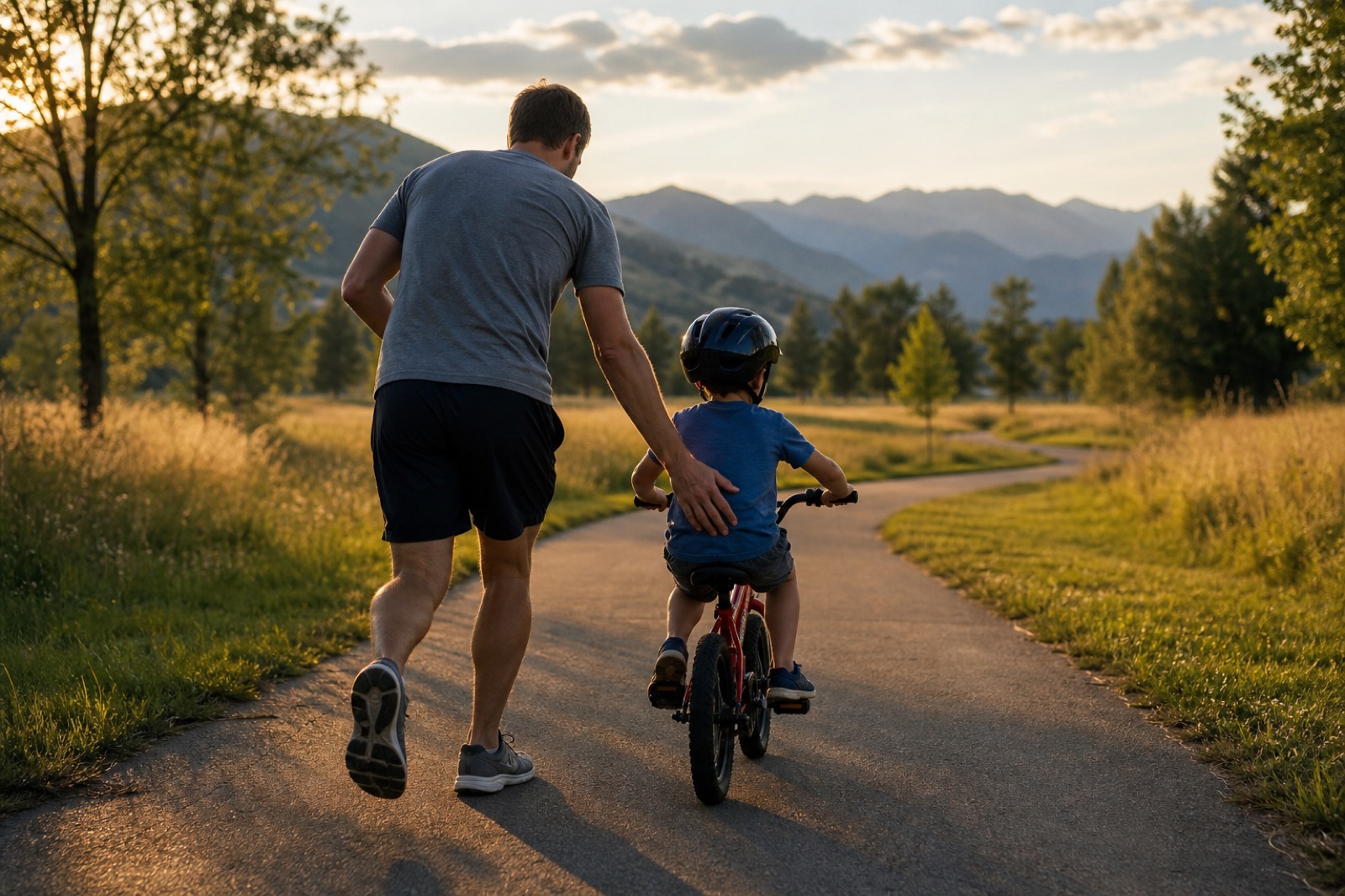
Learning to ride a bike asks a child to coordinate balance, steering, pedaling, and attention at the same time. Some children pick up those pieces quickly; others need more time to feel comfortable with the movement. A hard time riding does not mean a child is lazy or has a diagnosis. If biking matters to your child but the task keeps feeling out of reach, an occupational therapist can look at how the different pieces come together.
In Bozeman and surrounding areas, families may picture an ordinary ride outside when they think about this skill. The child may want to join a sibling or friend but hesitate before getting on. Talk about the part that seems hard rather than measuring your child against another rider. A child who likes being outside may still find steering and pedaling together unfamiliar.
02 / 05
The Body Has Several Jobs at Once
Keeping a bike upright depends on information about movement and body position. A child also uses their eyes to watch where they are going, their hands to steer, and their legs to move the pedals. Starting, stopping, and changing direction ask for different adjustments. These skills can feel easier in one setting than another, especially when the path, noise, or number of people changes.
We may consider balance, coordination, motor planning, and body awareness when we evaluate a movement concern. We also ask about the child’s experience: whether they want to ride, what feels uncomfortable, and what else they enjoy doing. A bike is one activity, not a test of overall development. Other tasks, such as climbing or joining a playground game, can help us understand how movement fits into daily life.
03 / 05
When Fear or Frustration Is Part of It
A child who has had a hard time balancing may feel uncertain about trying again. That uncertainty can make it harder to notice what their body is doing in the moment. Some children dislike the feel of a helmet or the noise of a busy path. Others are comfortable with the gear but find it hard to coordinate a start. Asking what your child notices is more useful than assuming that every hesitation has the same cause.
Parents can describe how an attempted ride usually ends and what the child says afterward. We do not treat confidence as something to demand from a child. We look at the task and the setting, then talks with the family about what support might fit. If a child has pain, dizziness, sudden loss of balance, or another medical symptom, speak with the pediatrician rather than assuming it is a coordination question.
04 / 05
What an OT Evaluation Can Clarify
An occupational therapy evaluation looks at the whole child, not only at whether a bike moves forward. We can observe posture, motor planning, bilateral coordination, sensory responses, and how your child approaches a new movement. The initial evaluation lasts 60 to 90 minutes. We choose observations and activities that fit the child and the family’s question; there is no single bike-riding score that determines whether care is needed.
If early movement patterns seem relevant, we may consider primitive reflexes as one lens within that full evaluation. These automatic patterns usually integrate as the nervous system matures, and research on retained reflexes in older children is still growing. They do not diagnose the reason a child struggles to ride and are not a stand-alone fix. We can explain what we are looking at without turning one observation into a prediction.
05 / 05
How We Can Help in Real Places
PEAK offers in-person pediatric OT at home, out in the community, or at school when the setting fits the child. For a biking question, we can consider how the child moves and participates in familiar activities, then choose appropriate play and movement work after evaluating them. Parents stay involved so they can understand what we see. We do not ask families to follow a step-by-step exercise from a website.
There is no diagnosis or physician referral required to start with PEAK. A free 15-minute consultation gives you room to describe what your child wants to do and where riding becomes difficult. We can discuss whether an in-home evaluation makes sense, and what it could look at beyond biking. Progress with a new skill varies from child to child; the starting point is understanding this child’s movement and everyday goals.