

Fine Motor Skills and Handwriting
Small movements, everyday moments
More than pencil and paper
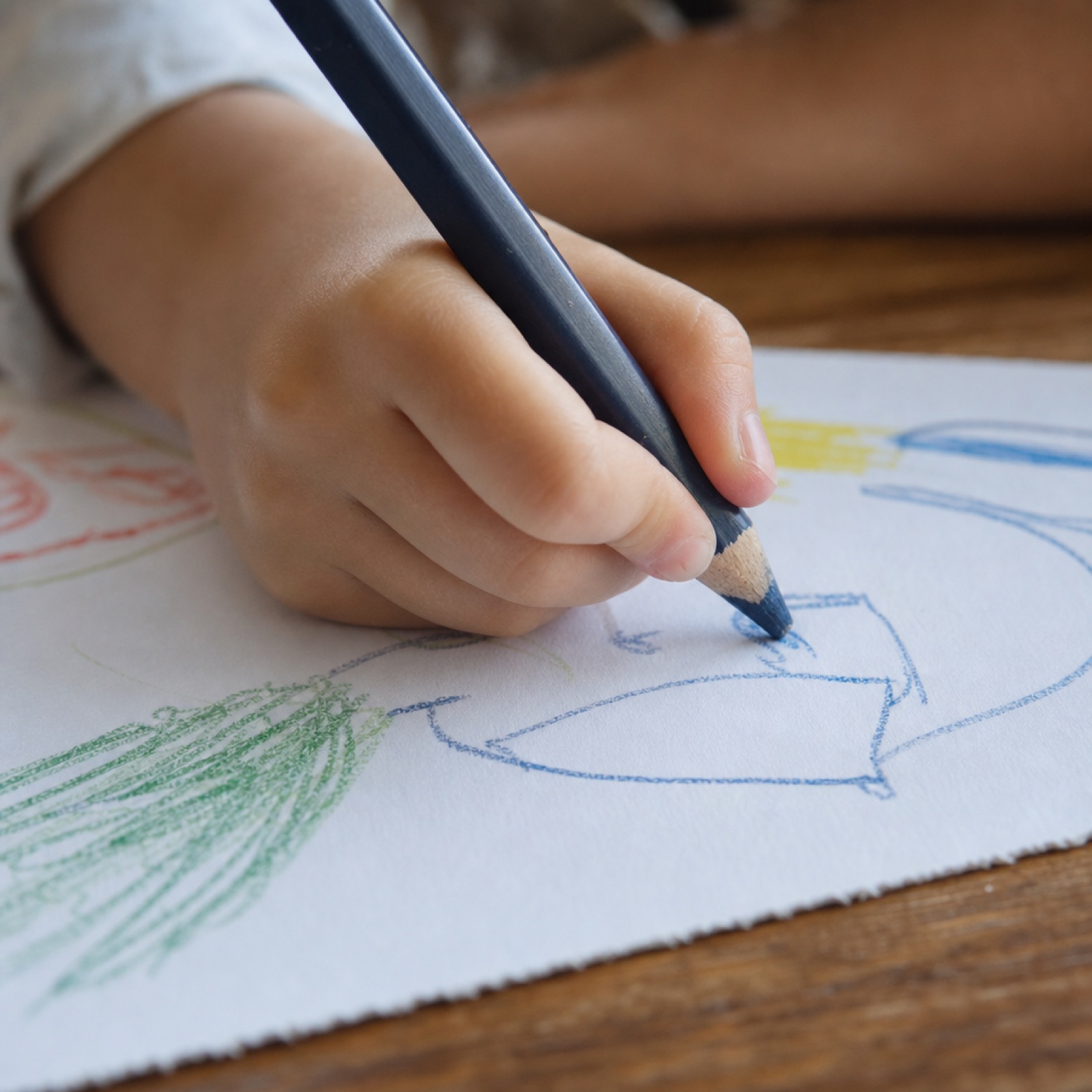
Handwriting, cutting, drawing, fastening buttons and zippers, or manipulating small objects all ask a child to coordinate what they see with what their hands do. When those tasks are difficult, we look beyond the finished product to understand what may be making them hard.
The Foundation Under the Hand
Posture and core strength, both sides of the body working together, crossing midline and visual-motor skills may all play a role. Looking at these foundations can help PEAK understand the whole-child picture.
Skills for Daily Life
Support may focus on meaningful activities at home and in the community, from getting dressed to participating in school tasks. We can work with your family on practical strategies that fit your child's routines.
What This Can Look Like at Different Ages
Preschoolers
Drawing, cutting, and handling small play objects give younger children many chances to use their hands. We notice how a child approaches the activity, not whether a picture looks a certain way.
School-Age Kids
Writing more often can reveal a tired hand, difficulty forming letters, or the effort of keeping up with classroom work. Buttons and scissors may also show how the hands work together beyond the page.
Teens
Longer written tasks and daily independence may bring hand fatigue into focus. A teen can tell us which part of writing or self-care they most want to make less demanding.
How We Help at Home
At home, we might look at how a child holds a pencil, handles a zipper, or uses familiar craft materials. We can consider posture and the work of both hands during a real task, then choose activities that make sense after evaluating the child. The aim is participation in the activities the child actually needs and wants to do.
How a child writes is only one part of the picture. We may ask how long writing takes, whether the child avoids certain tasks, and what they can do with their hands during play. A teen’s longer assignment and a younger child’s zipper ask for different kinds of endurance and coordination. Parents can share the specific materials that create difficulty so the discussion is grounded in everyday life.
Read more: Messy Handwriting and Pencil Grip: When to Look Closer · The Palmar Grasp Reflex.
Questions Parents Often Ask
Is messy handwriting enough reason to call an OT?
You can ask when writing slows your child down or causes frustration. We look beyond neatness to how the hand, posture, and whole task are working together.
Does a tight pencil grip prove a reflex is retained?
No. A grip can have several possible explanations, and one observation is not a reflex diagnosis. We consider early movement patterns only when clinically appropriate within a full evaluation.
Can fine motor sessions include dressing tasks?
Yes. Fasteners and other self-care tasks use hand skills in a different setting from writing. We can look at whichever activities matter in your child’s day.
A place to begin
Start with a Free 15-Minute Consultation
Tell us which tasks frustrate your child, like buttons, scissors, or writing.
Contact PEAK