
01 / 05
When Writing Takes So Much Effort
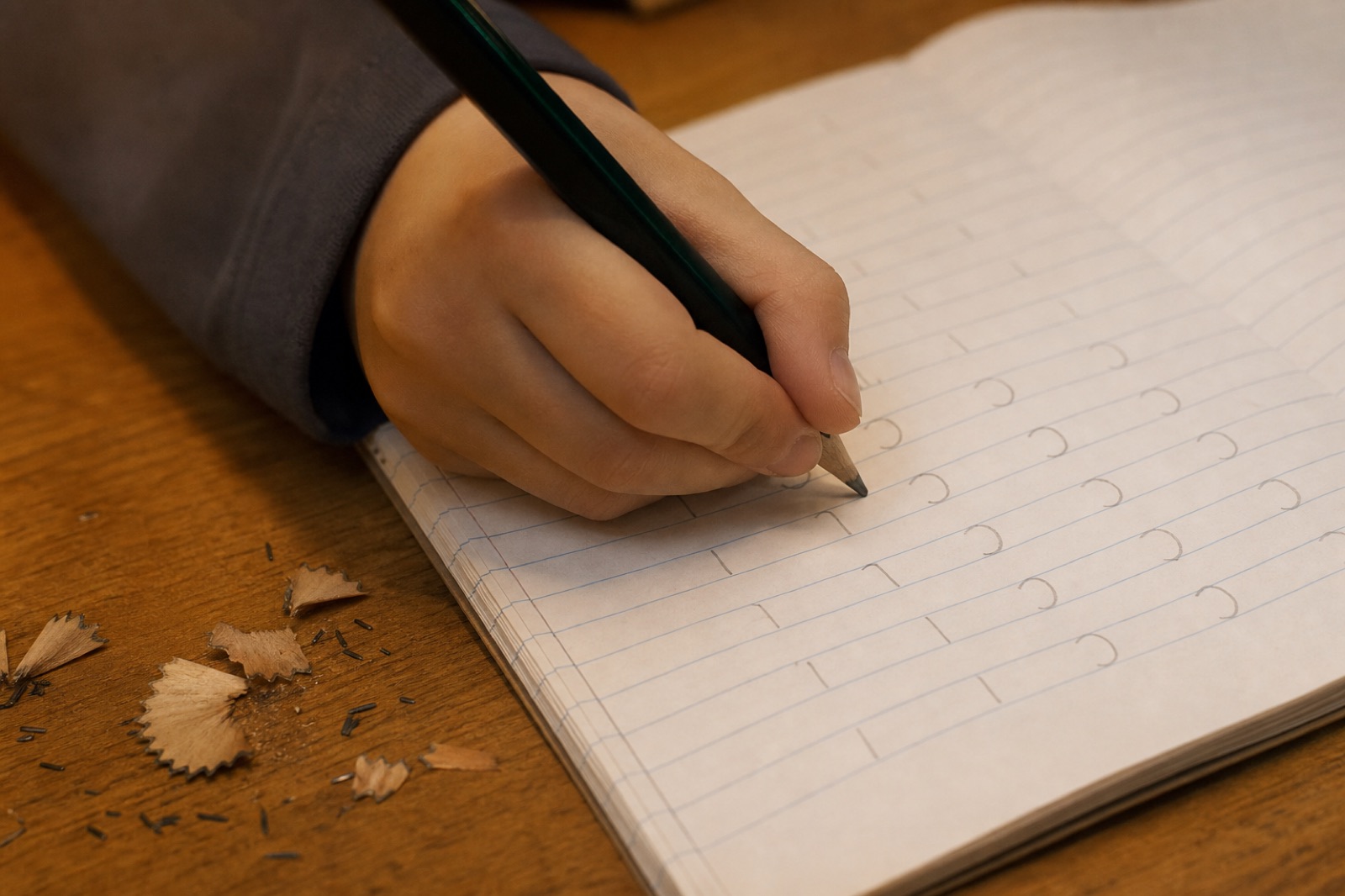
Messy handwriting is worth a closer look when writing is tiring, frustrating, or gets in the way of showing what a child knows. A pencil grip by itself does not tell you whether a child needs OT. The more useful question is how the full writing task goes: getting ideas onto paper, staying comfortable, finishing schoolwork, and feeling able to try again next time.
Some children can tell a detailed story but write only a few words before their hand tires. Others form letters clearly for a minute, then lose their place as the task goes on. We look at what changes during writing rather than judging a single finished page.
02 / 05
More Than Fingers
Handwriting draws on fine motor control, posture, coordination, attention, and motor planning. A child may be managing the pencil and the position of their body while also remembering what to write. If several demands arrive at once, the page may not reflect their understanding. We consider how these pieces work together during an occupational therapy evaluation.
We may also look at early movement patterns if it is clinically appropriate, but reflexes are one lens inside a full evaluation. Research on retained reflexes in older children is still growing, and no one grip or letter shape can identify a retained reflex. We begin with the task your child wants or needs to do.
03 / 05
What Home and School Can Show
A child’s writing may look different at the kitchen table, at school, or while drawing for fun. Does the task change when there is less time pressure? Is copying from a board harder than writing a familiar word? Does your child avoid the assignment but happily build or draw? These are observations to bring to a conversation, not a test to give your child.
We provide in-person care at home, in the community, or at school when that setting fits the child. Seeing a task in context can help us understand how materials, space, and the demands of the day affect participation. We include parents when discussing what the observations mean.
04 / 05
How We Approach It
An initial OT evaluation lasts 60 to 90 minutes. We consider fine motor skills, coordination, sensory processing, attention, and the activities the child enjoys. We discuss individualized recommendations afterward and may suggest one-on-one therapy if that fits the child’s needs.
Sessions are child-led and can include playful work with hands and movement, chosen after the evaluation. Parent education is included, so families understand why an activity is being used and how it relates to writing or other daily tasks. The aim is not to force a uniform pencil grip on every child.
05 / 05
A Good Reason to Ask
If your child avoids writing, complains of tired hands, or spends a long time on work they understand, you can ask us whether OT would be useful. A diagnosis is not required, and a free 15-minute consultation can happen before you decide about an evaluation. Tell us what teachers and your child have noticed, without needing to collect perfect samples.
PEAK serves Bozeman and surrounding areas. If writing difficulties came on suddenly or involve pain, speak with your child’s pediatrician as well. Our role is to look at how hand skills and the full task affect daily participation. It can help to describe what your child says about writing, because the experience of the task matters along with the marks on paper. We can ask about both during a visit at home.