
Primitive Reflexes
The Symmetrical Tonic Neck Reflex (STNR)
The pattern
A Crawling-Stage Pattern
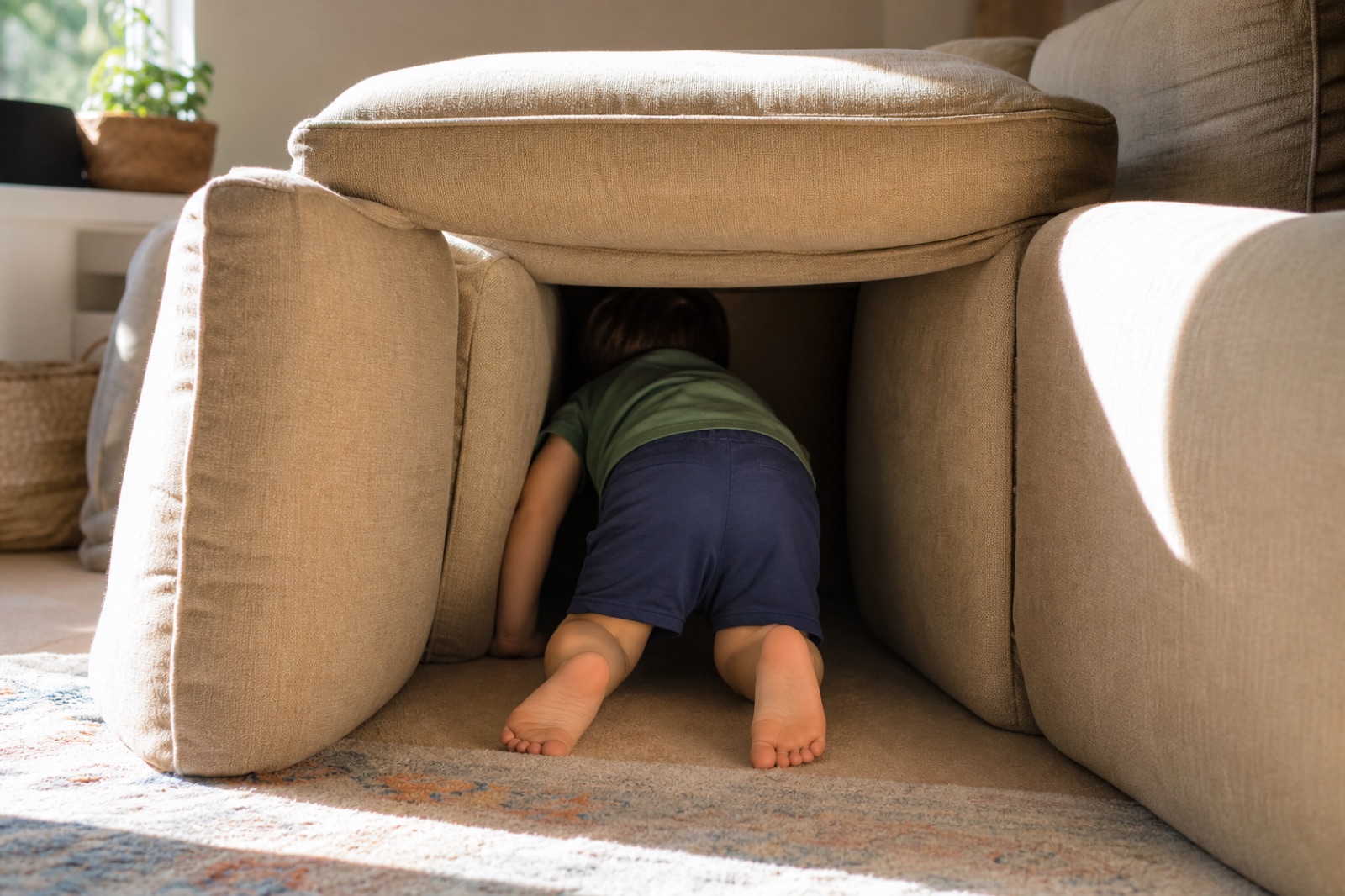
STNR links the position of the head with movement in the arms and legs. It is associated with the crawling stage around the first year and usually integrates as development continues.
A persistent STNR may present with challenges such as:
- ADHD
- Squirming or fidgeting; poor posture, slouching
- Reading and writing challenges
- Difficulty sitting still
- Difficulty copying from a blackboard
- Vision disorders
- Poor eye-hand coordination
- Trouble staying on task
- Clumsy, messy eater
Everyday life
At the Desk
Some children slump at a desk, sit in a W position, or find looking up at a board and back down to paper tiring. These observations do not tell a family which reflex, if any, is involved.
The whole child
School-Day Participation
We consider posture, coordination, attention demands, and the setup of school tasks together. Retained reflex research in older children is still growing; a reflex response is not a stand-alone explanation.
With PEAK
Part of the Evaluation
When clinically appropriate, we may assess this pattern inside the full occupational therapy evaluation. Any later activities are chosen for the child after that evaluation.
The goal is to understand why sitting and moving through school tasks may feel tiring for this child.
What Parents Might Notice at Home
Some parents notice a child leaning over a desk, shifting positions often, or tiring when looking from the board to a page. A child may choose a W sitting position during floor play. Those moments may be connected to several factors, including the seat, the task, or how much movement the day allows. They do not identify STNR on their own. Sharing when the child seems comfortable is as useful as describing when sitting looks hard.
How This Fits Into an Evaluation
The initial evaluation gives PEAK room to look at posture, coordination, and participation in school-related tasks. We can observe how a child changes position or moves between looking up and working on a page. When clinically appropriate, we may also consider the STNR pattern in that broader view. We choose movement activities after evaluating the child, rather than giving every child who sits a certain way the same plan.
STNR is associated with the crawling stage around the first year, but later desk posture is not a reflex diagnosis. Research on retained reflexes in older children is still developing. The question is how your child manages school and play, and which parts of those routines take extra effort. The guide linked below talks about focus and movement needs in a daily school routine.
My Child Can’t Sit Still. Is That an OT Question?Questions Parents Often Ask
Does W sitting prove my child retained STNR?
No. One preferred sitting position cannot tell you whether a reflex remains. We consider movement and daily participation together.
Why might copying from the board feel tiring?
Looking up and back down asks a child to manage posture, visual task demands, and attention. We can ask about the whole school task rather than assuming one cause.
Will PEAK give us a crawling exercise?
We do not prescribe activities from a page or a single observation. Any movement work is chosen after a full evaluation for your child.
A place to begin
Start with a Conversation
Describe the moments at school when your child has to work hardest to stay comfortable.
Book a Free 15-Minute Consultation